Peptigraph › Guides › Making peptide nasal spray: mixing and transferring
Guide
Making peptide nasal spray: mixing and transferring
Turning peptide powder into a metered nasal spray: the dose is set once when mixing, and the pump always delivers the same volume per spray.
A peptide nasal spray is a way to take a peptide through your nose. You dissolve freeze-dried peptide powder in water and spray it in with a small pump. Unlike an injection, where you control the dose, here the mixing decides how much active ingredient is in each spray. That is because standard metering pumps always deliver a fixed volume of 0.1 ml per spray. If you make a mistake in the mixing, you cannot fix it after the bottle is filled. This guide walks you through the steps from powder to finished spray bottle, without giving any medical dosage advice.
For a metered application, only a spray bottle that states the volume per spray is suitable. Every number on this page depends on this one piece of information: without it, you don't know how much active ingredient one spray delivers, nor how many sprays are in the bottle. Many empty bottles on the market lack this information, and you can't tell from the pump alone - in that case, the bottle is not suitable for a metered application.
What do you need to make a peptide nasal spray?
To make your own peptide nasal spray, you need four things: freeze-dried peptide powder, a spray bottle with a metering pump, water for dissolving, and a syringe for transferring. The exact steps for reconstituting the powder without shaking are described in the guide Mixing peptides (reconstitution). Making it into a nasal spray also needs attention to how the pump works and how much active ingredient is in the mix.
Before you start, check the nominal volume per actuation on the spray bottle's packaging. Not every metering pump delivers exactly 0.1 ml. If the actual volume per spray differs, the amount of active ingredient you get per spray changes, even if the spray looks normal. This mechanical detail is the basis for all your dosage and concentration calculations.
Which water is suitable for a peptide nasal spray?
When you pick the water for a peptide nasal spray, you face a trade-off. You want to protect against microbes, but you also want the spray to be gentle on your nasal lining. Bacteriostatic water (BAC water with 0.9 percent benzyl alcohol) is the standard for injections. But the European Medicines Agency (EMA) generally requires nasal products to be unpreserved, or to come with a separate justification. Right now, there is no reliable data on how benzyl alcohol affects the human nasal mucosa.
For alternative preservatives like benzalkonium chloride, studies show that they irritate the mucosa and impair ciliary activity (the tiny hairs that clear mucus). This is documented, among others, in a randomized crossover study. Without preservatives, a spray bottle used over several weeks is a microbiological risk. The pharmaceutical standard USP 797 requires cleanroom conditions for sterile unpreserved solutions. The guide Mixing BAC water yourself explains more background on this.
How do you calculate the peptide dose per spray?
To find the dose per spray, you multiply the concentration of the active ingredient per milliliter by the volume per actuation of the metering pump (standard: 0.1 ml). Here is the calculation: divide the amount of active ingredient in micrograms (mcg) by the water volume in milliliters (ml) to get the concentration per milliliter. Then multiply that by 0.1 to get the dose per spray. Example: 5 mg (5,000 mcg) dissolved in 5 ml of water gives 1,000 mcg/ml, which means 100 mcg per spray.
| Vial | Water | per milliliter | per spray (0.1 ml) |
|---|---|---|---|
| 5 mg | 2.5 ml | 2,000 mcg | 200 mcg |
| 5 mg | 5 ml | 1,000 mcg | 100 mcg |
| 5 mg | 10 ml | 500 mcg | 50 mcg |
| 10 mg | 5 ml | 2,000 mcg | 200 mcg |
| 10 mg | 10 ml | 1,000 mcg | 100 mcg |
This dosage table only works for metering pumps that deliver exactly 0.1 ml per actuation. Specific amounts and their scientific evidence are listed on the profile pages for Selank and Semax. The situation is different for PT-141 (bremelanotide): the approved finished product is a subcutaneous injection, while intranasal use has only been studied in early trials.
How much active ingredient is lost through priming and residual volume?
With a peptide nasal spray, you lose about 0.3 to 1 ml of solution through the initial pumping (priming) and the unusable residue at the bottom of the bottle. For approved sprays like desmopressin, 5 priming actuations are specified. The FDA also requires precise information on priming actuations for nasal sprays before first use and after longer periods of non-use. You need to factor this loss volume, plus the residue that cannot be fully dosed, into your calculation of how long the solution will last.
What knowledge gaps and risks exist with peptide nasal sprays?
For self-made peptide nasal sprays, there is a lack of scientific data on maximum volumes per nostril, target pH values, isotonicity, and stability for peptides like Selank, Semax, or PT-141. Nasal absorption is pharmacologically proven only for molecule sizes up to about 6,000 Daltons. Larger molecules like growth hormone (around 22,000 Daltons) need permeation enhancers, and studies show that the absorption-promoting effects of these enhancers are directly linked to tissue irritation.
The direct transport route from the nose to the brain (nose-to-brain) has been described, but expert reviews consider it quantitatively low for most peptides without active transport systems. Clinical human data on nasal administration exists for oxytocin and bremelanotide. For Selank and Semax, there is an imaging study with 52 participants, but the abstract does not explicitly state that the administration route was nasal. Practical mixing instructions online mostly come from forums and vendor sites without validation against primary sources.
After mixing, store the finished spray bottle cool and dark, as described in the guide Storing peptides.
Not medical advice.
Step by step
-
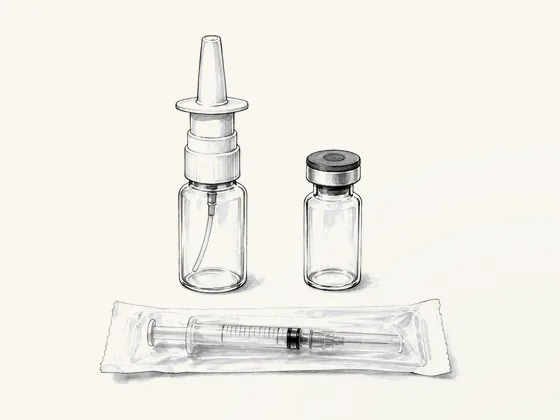 Step 1
Preparing and checking the spray bottle
Put the peptide vial, the empty spray bottle, water, and a syringe on a clean, dry surface. For standard pumps, each stroke delivers about 0.1 ml (check the packaging for this value, as it can vary). This volume is the key starting point for your dose calculation.
If the volume per spray isn't listed on the bottle or the packaging, choose a different bottle: without this information, nothing can be calculated.
-
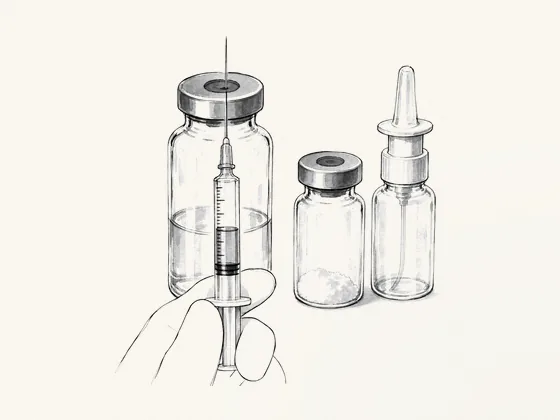 Step 2
Choosing the water and calculating the dose
To find the dose per spray, divide the amount of active ingredient in mcg by the water volume in ml, then multiply by the volume per stroke. Pick the right water, keeping in mind the balance between preservation and how well your nasal mucosa tolerates it, and decide how much you need before you begin.
-
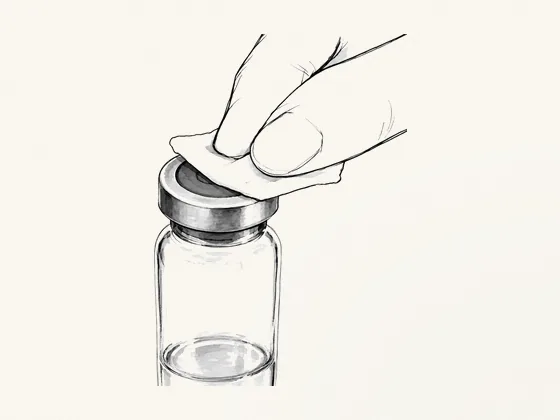 Step 3
Disinfecting the vial
To keep the solution clean, wipe the rubber stopper of the vial with an alcohol swab before piercing it, and let it dry briefly. Move quickly so the stopper does not dry out or get contaminated again.
-
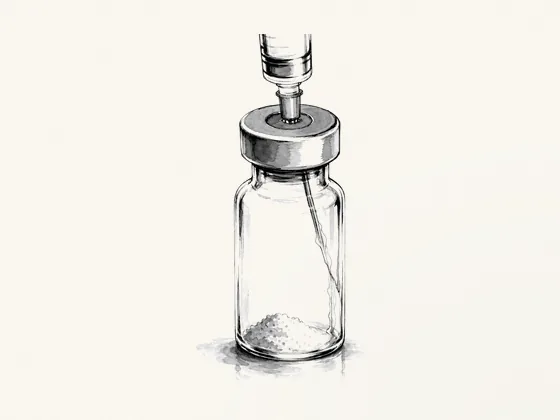 Step 4
Adding water and dissolving the peptide
Dissolve the peptide powder by slowly injecting the calculated amount of water with the syringe against the inner wall of the vial and gently rotating the container. Do not shake it, as this can damage the peptide chain. You can find the detailed instructions under Peptide anmischen.
-
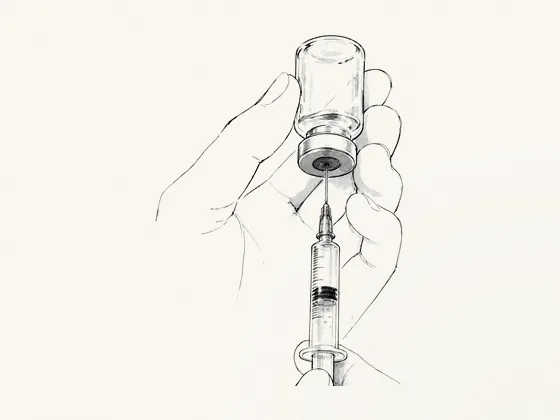 Step 5
Drawing up the peptide solution completely
Draw the entire peptide solution from the vial into the syringe without leaving any residue, because the total dose is in the dissolved volume. Check the syringe for air bubbles before the next step so the measured volume stays correct.
-
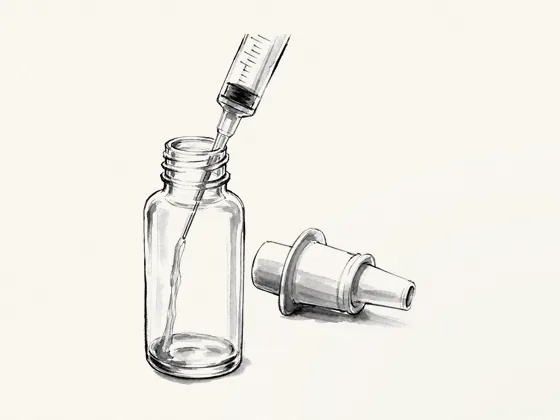 Step 6
Transferring the solution to the spray bottle
Transfer the solution slowly and evenly from the syringe into the opening of the spray bottle to avoid splashing and foam. Close the bottle right away with the pump mechanism, without touching its inner side.
Only pour the solution into a bottle if you know exactly how much it sprays per pump. If the volume per spray is not stated on the bottle, the solution is in there, but you will no longer be able to dose it precisely.
-
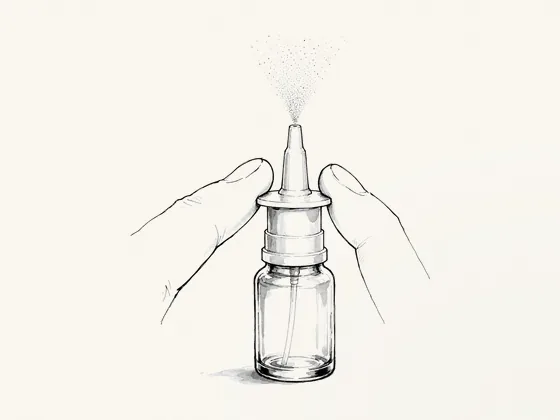 Step 7
Priming the pump
Prime the spray bottle by pumping several times into the air until a fine, even mist appears. Keep in mind that some solution is lost during priming when you think about the bottle's shelf life. After a longer break in use, you need to prime the pump again.
-
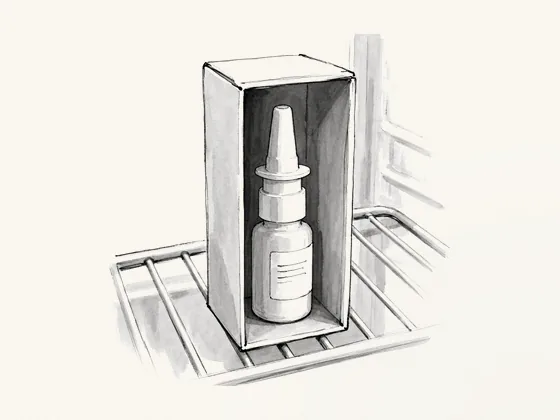 Step 8
Labeling and cool storage
Label the spray bottle right away with the date and the amount of active ingredient per spray (for example, "100 mcg per spray") so the contents are clear. Then store the solution cool and dark, as described in the guide Peptide lagern.
-
 Step 9
Performing nasal application
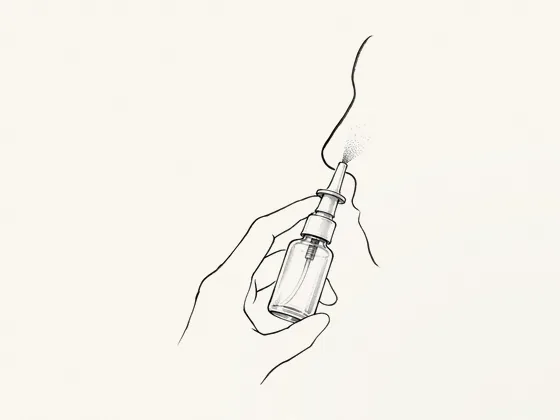
For correct nasal application, keep your body upright and aim the spray head slightly outward toward the outer wall of the nostril, not at the nasal septum. Spray exactly once and avoid forcefully sniffing afterward. Keep the spray tip away from skin or surfaces to keep the solution germ-free.
Spray Calculator
The spray dose calculator works out how much active ingredient you get in each spray and how many sprays you can get in total. To do this, it uses the amount of active ingredient, the water, and the spray volume, and it directly subtracts losses from priming and remaining residue.
Pass this guide on as an image


Sources
- Riechelmann H et al. Nasal toxicity of benzalkonium chloride. Am J Rhinol 2004. PMID 15586800
- Alabsi W et al. Nose-to-Brain Delivery of Therapeutic Peptides as Nasal Aerosols. Pharmaceutics 2022. PMID 36145618
- Desmopressin Acetate Nasal Spray - FDA Prescribing Information (Priming)
- Pharmazeutische Zeitung: Nasensprays - Besser unkonserviert
- PTA-Forum: Nasensprays - Am besten unkonserviert