Peptigraph › Guides › Storing peptides: powder vs. reconstituted solution
Guide
Storing peptides: powder vs. reconstituted solution
Powder (lyophilisate) and a reconstituted (mixed) solution follow different storage rules - here is how to keep your peptides stable.
Store peptides differently depending on their state: dry powder (lyophilisate) can be more robust, while a reconstituted solution is much more sensitive. Manufacturer instructions, peptide-specific storage notes and the Certificate of Analysis (CoA) matter most. Any time window is only a rough rule of thumb.
Storing powder (lyophilisate)
Lyophilisate means the peptide has been freeze-dried and sits as a powder in the vial. This powder can be chemically more stable than a solution, but it can attract moisture. Moisture, light, oxygen and heat may speed up degradation, meaning the peptide slowly changes or breaks down.
Store dry peptide powder airtight, dark and with a suitable desiccant if that fits the packaging and manufacturer instructions. Sequences containing cysteine, methionine or tryptophan can be especially sensitive because these amino acids may oxidize more easily. Think of a sliced apple: air and moisture can speed up visible and invisible changes.
For many lyophilized peptides, 2-8 °C in the fridge can be a useful short-term rule of thumb, often closer to less than 1 month. For longer storage, lab and manufacturer guidance often mentions -20 °C or colder. Whether a peptide stays stable at 2-8 °C for weeks or months depends strongly on the sequence, purity, residual moisture, packaging and CoA.
Ideally, check the storage spot with a fridge thermometer or min-max thermometer. That helps you see whether the area really stays around 2-8 °C and does not temporarily freeze or get too warm.
When taking a vial out of the fridge or freezer, do not open it immediately. As a practical rule of thumb, let it reach room temperature for about 15-20 minutes before opening or reconstituting it. This can reduce condensation inside the vial.
For long-term storage of dry powder, see the guide to freezing peptides. If you want to understand how a solution is made afterward, the guide to reconstituting peptides helps separate the terms and risks clearly.
Storing a reconstituted solution
Reconstitution means turning the dry powder into a liquid with a suitable solvent. BAC water, meaning bacteriostatic water, can reduce microbial risk in some multi-dose situations. It does not make a solution automatically sterile-safe, and it does not protect against chemical degradation.
Not every peptide is automatically compatible with BAC water. Some peptides may need other solvents, buffers, pH conditions or additives, and some may be unstable in certain media. Manufacturer instructions, the CoA and peptide-specific notes take priority over any general rule of thumb.
A reconstituted solution is usually stored dark and at a stable 2-8 °C if the peptide-specific guidance supports that. Do not place the vial in the fridge door, because temperatures can swing more when the door opens. The very back of the fridge can also be risky because it may freeze.
A blanket window such as 21-30 days can sound safer than it is. Depending on the peptide, solvent, hygiene, number of punctures and CoA, much shorter windows may apply. BAC water reduces one risk, but it does not remove it.
Every later handling step brings its own contamination risk. This includes a clean and disinfected work surface, disinfecting the stopper before every puncture, sterile single-use needles and syringes, no reuse and a proper sharps container. These points do not replace medical or pharmaceutical advice.
Before any further handling, visually check the solution. Cloudiness, particles, color changes or flocculation, meaning visible clumps or flakes, can be warning signs. If anything looks unusual, the solution should not be handled further. This matters especially with multi-dose vials.
In practice, reconstituted multi-dose vials with BAC water usually do not belong in the freezer. Ice crystals and repeated freeze-thaw cycles may damage peptides. In laboratories, individual peptides may sometimes be aliquoted, meaning split into small portions, and frozen, but that depends strongly on the peptide, solvent and purpose. It is not a general rule for finished multi-dose solutions.
As a starting point, the peptide overview can help you see which peptides may be more sensitive. Peptigraph presents this information for education only and does not replace medical, pharmaceutical or lab-specific clearance.
Note: Educational information only, not medical advice, not a dosing recommendation and not a sourcing recommendation. Many peptides are experimental, not approved for human use or only relevant in clearly defined regulatory settings.
Not medical advice.
Step by step
-
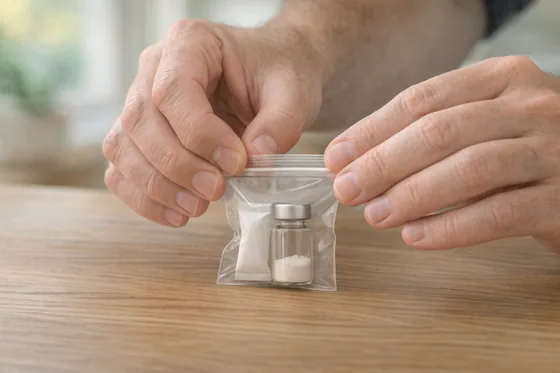 Step 1
Dry, dark and airtight
Powder (lyophilisate) can attract moisture. Keep it airtight, dark and preferably with a suitable desiccant if the packaging and manufacturer instructions support that.
Especially sensitive sequences, for example those containing cysteine, methionine or tryptophan, may react more strongly to oxygen, moisture and light. The CoA and manufacturer guidance matter more than any general rule of thumb.
-
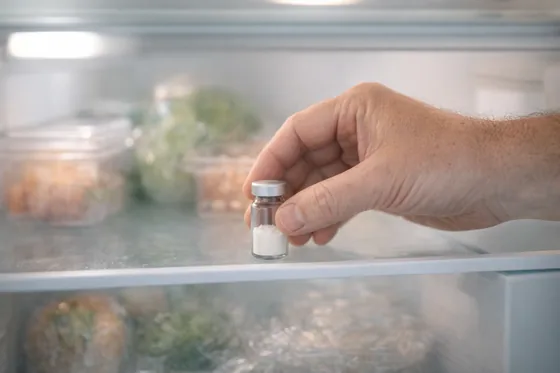 Step 2
Keep it cool, but do not overestimate time windows
A fridge at 2-8 °C can be a short-term option for many dry lyophilisates, often closer to less than 1 month. Whether longer storage makes sense depends on peptide sequence, purity, residual moisture, packaging and manufacturer instructions.
Keep vials organized and protected from light. For dry powder, standing upright is usually more about order than a general stability requirement.
Choose a spot with the most stable 2-8 °C possible: not right at the back, because it can freeze there, and not in the door, because temperatures swing when it opens. A fridge thermometer or min-max thermometer can help.
Peptides may be light-sensitive. Opaque insulin or medication cooler cases can protect from light and keep things tidy; they are available cheaply on online marketplaces, for example a search for "vial case" on AliExpress.
-
Step 3
Let cold powder acclimate first
When you take a vial out of the fridge or freezer, do not open it immediately. As a practical rule of thumb, let it reach room temperature for about 15-20 minutes.
The reason is condensation: cold surfaces attract moisture from the air. If that moisture gets into the vial, it may damage the dry peptide powder faster.
-
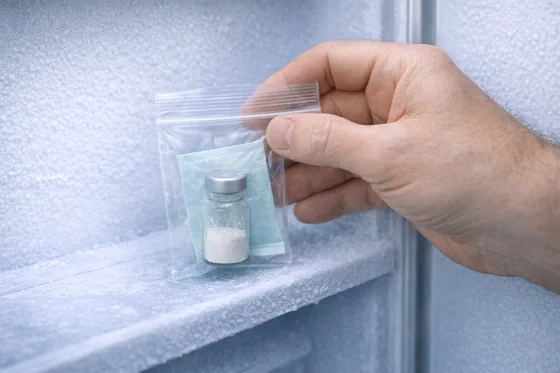 Step 4
Store powder long term closer to -20 °C
For longer storage, -20 °C or colder is often mentioned as a lab-oriented rule of thumb for many lyophilized peptides. A household freezer can fluctuate; manufacturer instructions, the CoA and peptide-specific stability remain decisive.
Avoid frequent thawing and refreezing. The freezing guide explains the details.
-
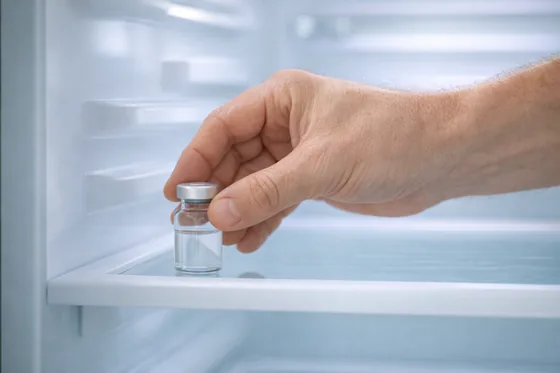 Step 5
Cool reconstituted solution carefully
A reconstituted solution is more sensitive than dry powder. If the peptide-specific instructions allow it, it is stored dark and at a stable 2-8 °C.
Not every peptide is automatically suitable for BAC water. Some peptides may need other solvents, buffers, pH values or additives.
The same fridge placement rule applies: not right at the back because of possible freezing, and not in the door because of temperature swings.
-
Step 6
Take hygiene seriously with multi-dose handling
With reconstituted solutions, sterility is a separate risk. A disinfected work surface, a disinfected stopper before every puncture, sterile single-use needles and syringes, no reuse and a proper sharps container are important safety basics.
BAC water can inhibit microbial growth, meaning it can slow germs down, but it does not make a solution automatically sterile-safe for an unlimited time. It also does not prevent chemical degradation of the peptide.
-
 Step 7
Time windows, visual checks and documentation
General windows such as 21-30 days are only rough rules of thumb and may be too long for individual peptides. What matters is the peptide, solvent, hygiene, puncture frequency, manufacturer instructions and CoA.
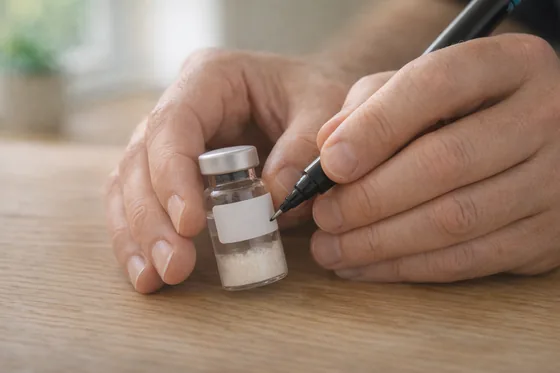
Label the vial with the reconstitution date and visually check the solution before further handling. Cloudiness, particles, color changes or flocculation are warning signs.
For neutral documentation, the Injection Manager can help record mixing date and vial information. This is not a recommendation for human use and not a dosing guide.