Nutrition
AI finds bioactive peptides: What does that mean?
A new review shows how AI detects bioactive peptides in food. We explain what that means for your diet
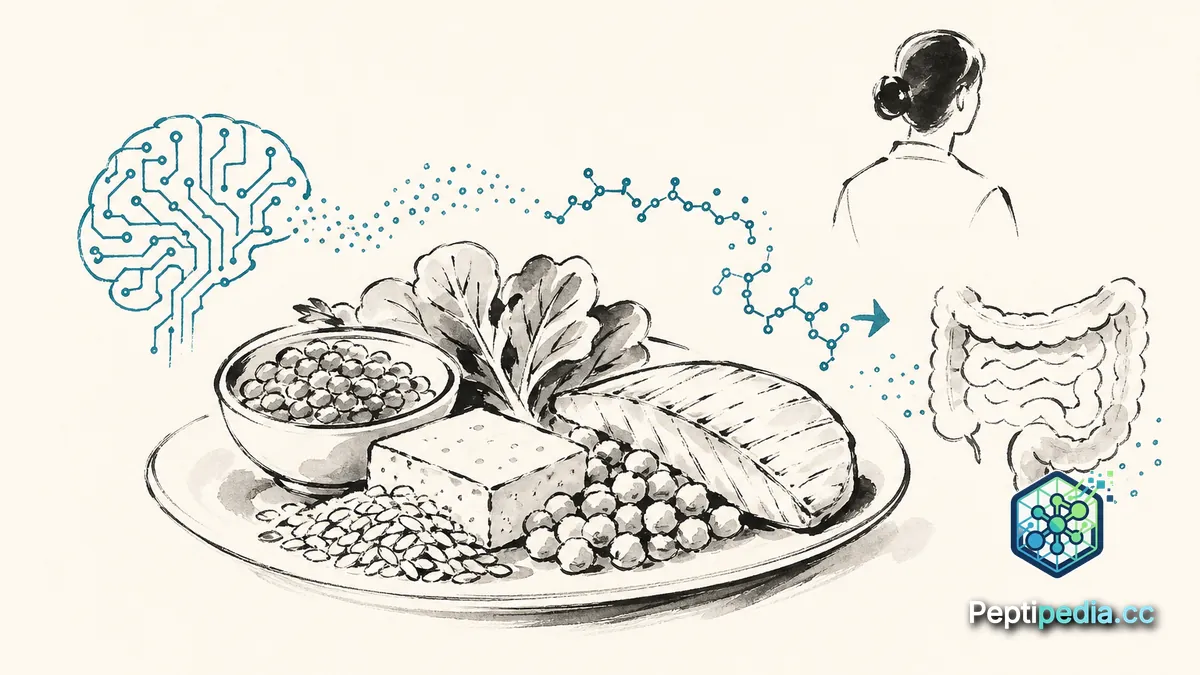
International: Artificial intelligence (AI) is accelerating the discovery of bioactive peptides in food, according to a new review in Frontiers in Nutrition (December 2025). Bioactive peptides are short protein building blocks that can act as signaling molecules in the body. The review describes AI as a key to unlocking the "dark matter" of our food - those undiscovered compounds that influence health. In the future, foods could be more specifically enriched with health-promoting peptides.
Peptides are short chains of amino acids and serve as tiny protein building blocks. They occur naturally in foods such as milk, eggs, or legumes. While identification was previously extremely laborious, AI can analyze large amounts of data and recognize patterns that elude human researchers. The review in Frontiers in Nutrition classifies how AI models identify bioactive peptides and assess their biological effects.
Bioactive Peptides and AI: The Essentials at a Glance
- Artificial intelligence (AI) is accelerating the discovery of bioactive peptides in foods, as shown in a review published in Frontiers in Nutrition.
- Bioactive peptides are short protein building blocks that can act as signaling molecules in the body.
- AI predictions must always be confirmed experimentally, as AI is a tool and not a substitute for laboratory work.
- Functional products with deliberately added bioactive peptides could be on store shelves within a few years.
- Health effects must be substantiated by clinical studies in humans.
AI research: How machine learning finds bioactive peptides
The authors of the review emphasize that AI techniques such as machine learning massively accelerate the discovery of bioactive peptides. Instead of testing each peptide individually in the laboratory, AI predicts which candidates are particularly promising. This saves time and costs. However, the review also names clear limitations: AI predictions must always be confirmed experimentally. AI is thus a tool, not a replacement for laboratory work.
Bioactive peptides in nutrition: Future trends for consumers
For consumers, this means: In a few years, functional products with specifically added bioactive peptides could be on the shelf - for example, yogurts with blood-pressure-regulating peptides or snacks with antioxidant building blocks. Currently, however, research is still in its infancy. Many products that already advertise with "bioactive peptides" today do not deliver what they promise. AI is driving development forward, but there is still a long way to go until market maturity.
Structure-activity relationships: AI understands peptide functions
AI not only helps find new peptides, but also understand their mode of action. The review shows that AI can elucidate structure-activity relationships - that is, how the chemical structure of a peptide determines its biological effect. This is essential for developing peptides specifically for particular health goals. At the same time, the work emphasizes that AI results must always be critically examined. More details on this are provided by the peptide library.
Market potential for functional foods with peptides
AI-supported discovery could sustainably invigorate the market for functional foods. Companies are able to develop new products enriched with bioactive peptides more quickly. This progress ties into the trend of fermented peptides in snacks. What remains important: Not everything technically feasible is also sensible. The health effects must be conclusively demonstrated through clinical studies in humans.
Evidence and reliability of the peptide review
This review is a review article that summarizes the current state of research but contains no new original experiments. The statements are based on the evaluation of already published studies. Therefore, the quality of the underlying data is crucial. Results should always be critically questioned and not seen as proof for specific products. You can find a classification of the scientific evidence in the article about BPC-157 and GHK-Cu.
No medical advice: This article is for information only and does not replace medical or nutritional medical advice.
Sources
Not medical advice.