Research
Lab Tests: 1 in 3 Research Peptides Contaminated
Independent lab tests from 2025/2026 reveal that one in three budget research peptides contains heavy metals, bacterial endotoxins, or the wrong active compound - with purity levels dropping below 80 %.
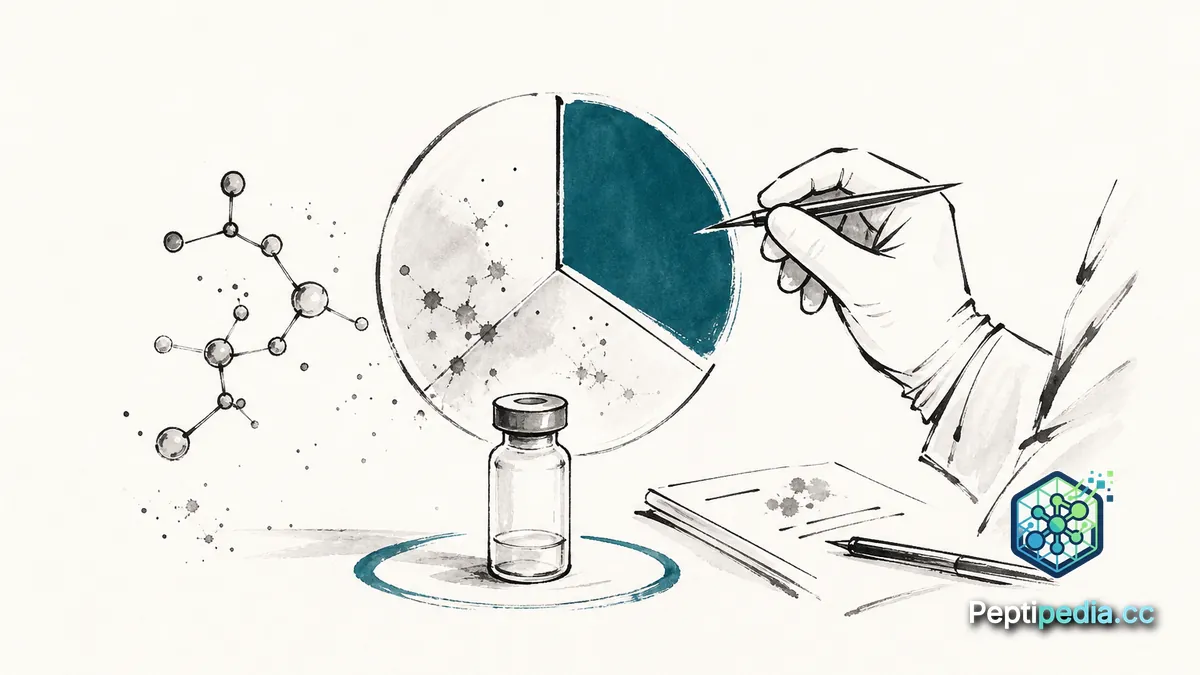
Imagine ordering a lab product online - and the vial contains something entirely different or is contaminated with heavy metals. That is exactly what recent lab tests reveal about so-called research peptides. These are lab-made protein molecules (short chains of amino acids) that are often sold on the gray market labeled "for research only," but are used by many consumers for self-experiments on their own bodies.
Independent laboratory tests conducted in 2025 and 2026 reveal alarming contamination levels in so-called research-grade peptides. An analysis of ten peptide samples from various vendors found that three samples failed - showing heavy metal contamination, wrong active ingredients, or purity below 80 percent. The findings highlight deep quality issues in a largely unregulated market.
What did the lab tests find?
The investigation, published by The Peptide List (2026), tested peptides from four vendor tiers - from premium (Tier 1) to budget (Tier 4). Results varied dramatically:
- Budget vendors (Tier 4): BPC-157 showed only around 70 % purity with documented heavy metal contamination from lead and mercury. Endotoxin levels (bacterial endotoxins - these are toxic waste products from bacteria that can trigger fever and inflammation even in tiny traces) reportedly reached far above acceptable limits for injectables. A product labeled as Semaglutide apparently did not contain the declared compound - the mass measured via mass spectrometry differed noticeably from authentic Semaglutide.
- Direct manufacturers (Tier 3): BPC-157 reached purity levels in the lower 90 % range, endotoxins borderline.
- Established vendors (Tier 2): Around 95-97 % purity, heavy metals below detection limits, but endotoxins 2-4 times higher than pharmaceutical grade.
- Premium vendors (Tier 1): Consistently >98 % purity, no heavy metals, endotoxin levels below 1.0 EU/mg.
As early as 2024, Novo Nordisk pointed out in an FDA filing that compounded semaglutide (semaglutide individually mixed in pharmacies, a practice known as compounding) sometimes showed substantial total impurities, including unknown substances not present in the original drug.
Why do contaminants matter?
Heavy metals like lead and mercury accumulate in tissue and can cause damage to the nerves and brain (neurological), the kidneys (renal), and the liver (hepatic). Bacterial endotoxins (lipopolysaccharides) trigger inflammatory responses even at low levels - potentially skewing research data. Anyone who injects such contaminated products into their own body risks not only inflammation at the injection site, but also long-term organ damage from the heavy metals. As NutraIngredients (Dec. 2025) reported, toxicologist Oliver Catlin (Banned Substances Control Group) warned that quality control for research peptides effectively lies with the manufacturer alone, and that independent proof of what buyers actually receive in the vial is usually missing.
For researchers, this means a supposed peptide effect may actually stem from contaminants. Without independent lab tests, the actual quality of these products is virtually impossible for outsiders to verify.
How to identify high-quality research peptides
A reliable research peptide should meet these criteria:
- Batch-specific COA (Certificate of Analysis - the test certificate for a particular batch) from an independent laboratory, not the manufacturer
- HPLC purity ≥98 % (HPLC is a standard lab test used to measure how clean a substance is) - anything below is industrial or reagent grade
- ICP-MS heavy metal screening (a test that looks for toxic heavy metals) for lead, cadmium, mercury, and arsenic
- Endotoxin testing (LAL assay) - a standard procedure for measuring endotoxin levels - with values below 1.0 EU/mg for cell culture work
- Identity confirmation via LC-MS/MS (a mass spectrometry procedure that verifies whether the vial actually contains the right substance)
Learn more in our FAQ: How to recognize peptide quality and avoid risks.
Conclusion: Research-grade is not a guarantee
Current lab data show that the term "research-grade" is not protected and says nothing about actual quality. While premium vendors deliver >98 % purity with verified contaminant-free products, budget suppliers sell vials containing heavy metals, endotoxins, and even the wrong compounds. For valid research results, an independent Certificate of Analysis is essential.
Disclaimer: This article is for informational and educational purposes only. It does not constitute medical advice and is not a substitute for professional medical consultation. Peptides sold as "research chemicals" are not approved or tested for human use.
Sources
- The Peptide List: We Sent 10 Peptides to a Lab. 3 Failed. (2026)
- NutraIngredients: The hidden epidemic of unapproved research peptides (Dec. 2025)
- Docket Nos. FDA-2015-N-0030, FDA-2024-P-5378
- PeakForce Labs: Peptide Testing - The Importance of Purity in Research (2026)
- 2026 Peptide Industry Report - Koi Peptides / Grand View Research
Not medical advice.